

AI SEO writing is no longer about drafting faster — it’s about scaling smarter.
If you’re still relying on manual content creation, you’re already losing ground to competitors using automation to publish optimized, data-backed articles in minutes.
In this guide, you’ll discover how to build a high-performance AI SEO writing system that maps search intent with precision, protects E-E-A-T, and turns every article into a scalable traffic asset. We’ll break down the exact modular framework — from automated keyword research to autonomous publishing — that modern agencies and publishers use to dominate search.
Ready to try Wisewand for your SEO content?
Generate SEO-optimized articles in minutes
Automate internal linking across your site
Scale affiliate sites and client SEO faster
Used by SEO agencies, affiliate marketers and content publishers.
SEO AI Writing: Why Automated Workflows Dominate Search
Actually, sticking to manual methods is a recipe for invisibility. This year marks the definitive shift toward total automation, and if you aren’t on board, you’re already behind.
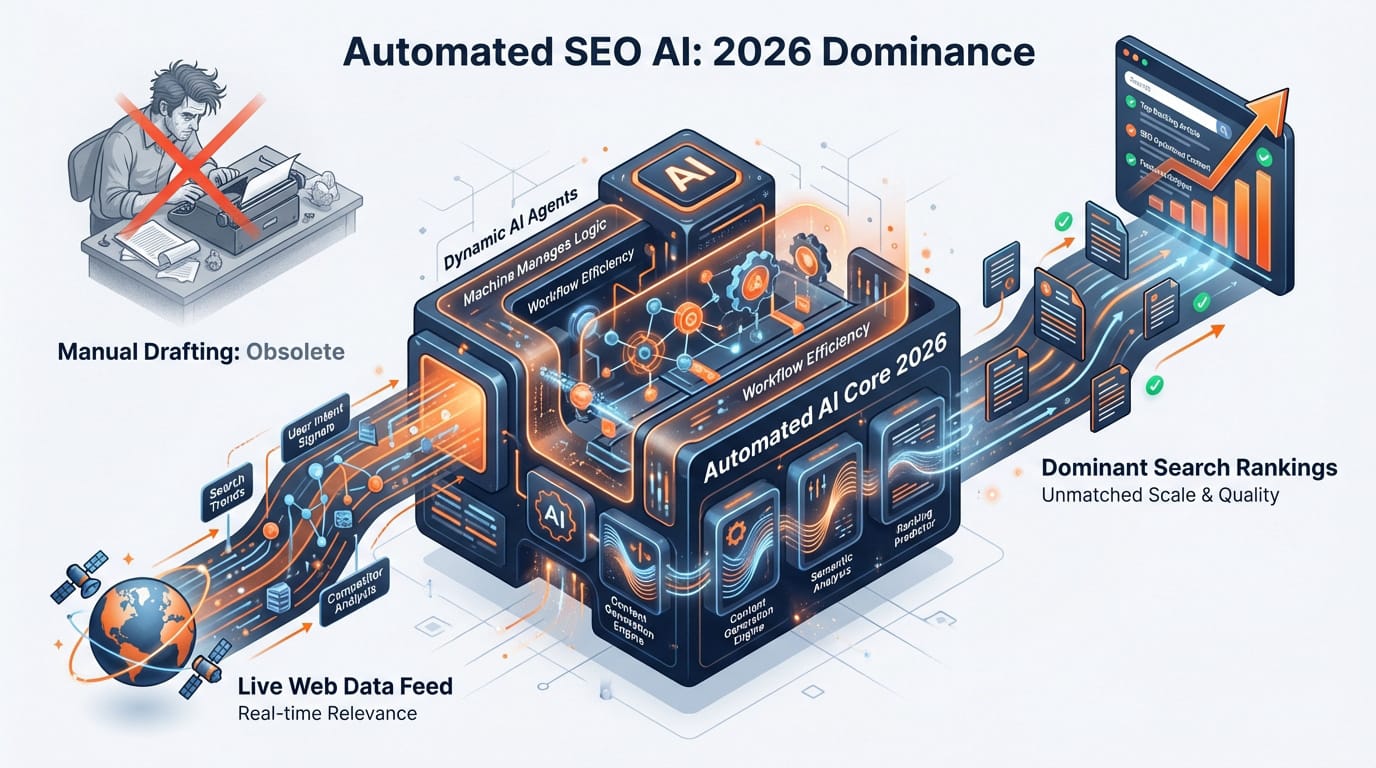
Moving Beyond the Manual Drafting Bottleneck
Writing by hand is now a massive business risk. AI systems outpace human output by orders of magnitude. You simply cannot win this race using outdated, slow methods.
Modern workflows deliver massive efficiency gains. Speed no longer means cutting corners on quality in these advanced setups.
Scaling is non-negotiable. Human writers alone cannot meet current market demands.
Leveraging Live Web Data for Immediate Relevance
Real-time web access stops your content from rotting instantly. Factual accuracy now relies on pulling the very latest SERP data. This keeps your pages relevant for Google’s picky algorithms. Static information is a fast track to the bottom.
Fresh data directly dictates your rankings. Search engines always favor the most current insights. Using frozen, static databases for SEO is now completely useless.
The Shift From Prompt Engineering to Dynamic Agents
We have moved past manual prompts to autonomous agents. These systems manage the entire SEO writing workflow. Forget about spending hours on complex prompt engineering.
Modern tools use a clever modular architecture. Each specific agent focuses on one part of the task.
Manual intervention is over. The machine handles the underlying logic now.
4 Core Stages of a High-Performance Content Pipeline
Now that we understand the “why,” let’s break down the mechanical “how” of a modern production line.

Automated Keyword Research and Intent Mapping
How do you spot traffic goldmines without wasting weeks? I use predictive tools to map search intent with surgical precision. Forget basic volume metrics. We need to nail what users actually want right now.
Stop ignoring semantic gaps. Find what your rivals missed. The data tells the whole story.
- User intent categories
- Semantic gap analysis
- Competitor keyword overlap
Structure Generation Based on Competitor Gaps
I build logical outlines by stripping themes from direct rivals. Don’t leave money on the table. Make your content optimization exhaustive and much better than the competition.
Structural superiority wins every time. A tighter plan equals better rankings in the long run.
Use data for the skeleton. Stop guessing your headings today.
Bulk Generation and CMS Auto-Publishing
Scaling production shouldn’t be a nightmare. Connect your workflow to WordPress or Shopify. Automation handles daily publishing while you sleep. That’s how you dominate niches effectively without burning out.
Auto-publishing is the secret to a relentless calendar. It keeps the engine running. Check out these automated workflow insights to stay ahead of everyone else.
How Do You Protect E-E-A-T in an Automated Draft?
Scaling is great, but it’s worthless if Google doesn’t trust your content, so let’s talk about authority.
Implementing Rigorous Fact-Checking Protocols
I build systems to fight AI hallucinations head-on. You must validate every single source the machine cites. This step is vital for technical or medical topics. Your credibility is the only currency that matters here.
Always verify technical claims before hitting publish. I recommend using cross-referencing tools for accuracy. It keeps your data honest and reliable.
- Source verification
- Hallucination checks
- Technical data validation
Infusing Emotional Intelligence and Brand Voice
I train models on specific brand voices to keep things authentic. Adding a human perspective prevents that generic, stale tone. Empathy must always match your target audience’s needs.
Focus heavily on stylistic consistency throughout the piece. The AI should truly sound like you, not a bot.
Avoid the robotic feel. Inject your personality into every single draft you generate.
The Human-in-the-Loop Editing Mandate
The editor’s role is the final, non-negotiable stage of the process. I optimize for emotional resonance and strategic alignment. Humans provide the emotional intelligence AI simply lacks. This makes certain the content truly connects.
My final validation process is strictly about quality control. You can find more insights at WiseWand Reviews. It is about maintaining high standards.
Generative Engine Optimization (GEO) vs Traditional Ranking Tactics
Beyond standard Google results, a new frontier called GEO is changing the rules of engagement for every digital marketer.

Optimizing for ChatGPT and Perplexity Assistants
Adapt data structures for generative engines. Focus on being cited in AI responses. Understand how conversational assistants select their sources. This is the future of digital visibility.
Structure your answers clearly. Focus on citation strategies. How do you win the AI game?
- Direct answer formatting for maximum impact
- Source authority and established trust factors
- Conversational keyword targeting for real humans
Automating Internal Links and Technical SEO Tags
Use AI to scan and link relevant site pages. Generate meta tags and structured data automatically. This strengthens domain authority effortlessly and very quickly indeed for everyone.
Focus on the internal linking web. It helps crawlers and users find your content easily and fast.
Automate the boring stuff. Let the AI handle tags for you.
Technical Automation for Meta Data and Alt Text
Produce optimized descriptions and alt text at scale. Improve accessibility and image SEO using AI vision. This reduces time spent on repetitive technical tasks. Efficiency is the primary goal here today.
Mention the impact on image search. AI writes better alt text than humans. It is smarter, faster, and more accurate than manual work.
Scaling Production with Programmatic SEO and Content Atomization
Finally, let’s look at how to turn one piece of content into a massive traffic-driving machine.
Building Data-Driven Localized Pages at Scale
Deploy programmatic SEO strategies for local pages to dominate search results. Use massive databases to generate thousands of unique articles across various territories. Dominate geographic niches with minimal effort. This is pure industrial-scale growth for your brand.
Data-driven pages rely on smart logic to stay relevant. Each template must feel unique to the reader to build real trust. Stop wasting time on manual entry today.
Transforming Blog Posts into Multi-Channel Assets
Break long articles into social media snippets for better engagement. Create automated newsletters from existing content to keep readers hooked. Maximize the ROI of every draft you produce.
Focus on content atomization to spread your message. One post becomes ten assets without extra hard labor.
Scale your presence everywhere. Don’t waste your words.
Mastering automated workflows and multi-agent systems transforms content production into a high-speed competitive engine. By integrating human oversight, your seo ai writing strategy achieves the scale and authority needed to dominate search rankings. Deploy these modular stages now because the future belongs to those who automate excellence.
Ready to try Wisewand for your SEO content?
Generate SEO-optimized articles in minutes
Automate internal linking across your site
Scale affiliate sites and client SEO faster
Used by SEO agencies, affiliate marketers and content publishers.
FAQ
What are the defining trends for automated SEO workflows?
The landscape has shifted toward predictive analysis and agentic SEO. We are moving away from manual, reactive tasks toward proactive systems that use machine learning to anticipate SERP volatility and automate the entire content pipeline. Today, the focus is on integrating real-time data to ensure every piece of content remains factually accurate and hyper-relevant to current search trends.
Which specific SEO tasks can I actually automate today?
Automation handles everything from keyword clustering and search intent mapping to technical site audits and real-time rank tracking. Advanced workflows now include bulk content generation, automated internal linking, and direct CMS publishing to platforms like WordPress or Shopify. This allows us to scale production without the traditional manual drafting bottleneck.
Which AI SEO tools are recommended for high-performance workflows?
For pure content scale, eesel AI blog writer is a leader in generating ready-to-publish articles, while Alli AI excels at automating on-page optimizations like meta tags and schema. If you need custom, no-code automation, Gumloop allows us to build sophisticated agents that connect your entire SEO stack. These tools ensure that speed never sacrifices technical precision.
How do I protect my site’s E-E-A-T when using automated drafts?
Maintaining authority requires a human-in-the-loop mandate. While AI generates the bulk of the draft, we must implement rigorous fact-checking protocols and infuse the content with unique brand voice and emotional intelligence. Google prioritizes “people-first” content, so your automated workflow must include a final editorial layer to ensure expertise and original value.
How are we moving from manual prompt engineering to dynamic AI agents?
The era of complex manual prompting is over; we have entered the age of Agentic SEO. Modern systems use modular architectures where specialized agents handle research, structure, and writing autonomously. These dynamic agents manage the logic and context themselves, allowing you to focus on high-level strategy rather than micro-managing the AI’s output.
Can automation really help with Generative Engine Optimization (GEO)?
Absolutely. Automation is essential for GEO because it allows us to structure data specifically for AI assistants like ChatGPT and Perplexity. By automating JSON-LD markup and direct-answer formatting, we increase the likelihood of your brand being cited as a primary source in AI-generated responses, securing your visibility in the future of search.
What are the main risks of relying too heavily on SEO automation?
The primary danger is content homogenization. If you let the machine run without strategic oversight, you risk producing generic text that fails to connect with your audience. We must balance industrial-scale growth with human judgment to avoid hallucinations and ensure that the automated output aligns perfectly with your specific business goals and user intent.